

The Invisible Crisis in Hospital Hallways
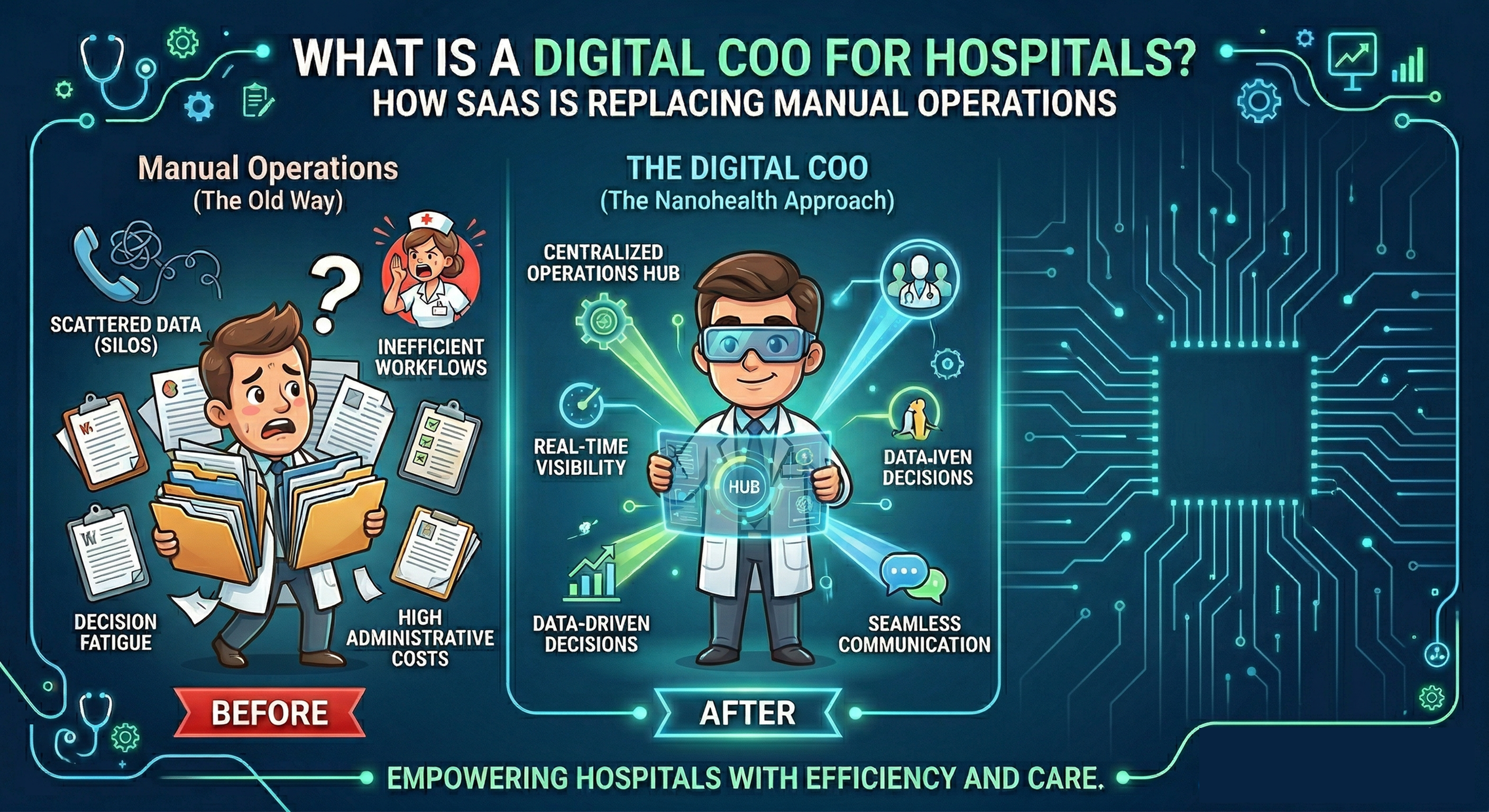
If you walk into a modern hospital, you’ll see multimillion-dollar MRI machines, robotic surgical arms, and life-saving drugs. But if you step into the administrative offices, you might find a different story: stacks of paper, frantic phone calls to find an available bed, and exhausted managers staring at disjointed Excel spreadsheets.
For decades, hospitals have operated on "manual muscle." The Chief Operating Officer (COO) of a hospital is responsible for ensuring the facility runs like a well-oiled machine. However, as healthcare becomes more complex, the human brain—and the manual tools we’ve relied on—can no longer keep up.
This is where the Digital COO comes in.
What Exactly Is a "Digital COO"?
A Digital COO isn't a person with a robot heart; it is a centralized, intelligent software layer that oversees, automates, and optimizes the daily operations of a hospital.
Think of it as the "brain" of the hospital’s infrastructure. While doctors focus on the clinical side (healing the patient), the Digital COO focuses on the operational side (the flow of the patient, the staff, and the resources).
The Three Pillars of a Digital COO:
● Visibility: Knowing exactly what is happening in every ward, in real-time.
● Predictability: Using data to guess what will happen tomorrow (e.g., "We will have a shortage of nurses in the ER by 4 PM").
●Automation: Fixing problems before a human even notices them (e.g., automatically reordering surgical kits when stock is low).
The "Manual" Problem: Why the Old Way Is Breaking
Before we look at the digital future, we have to acknowledge the "paper-and-shouting" present. Manual operations in a hospital lead to three major "silent killers":
A. The "Black Hole" of Data In a manual hospital, data exists in "silos." The pharmacy doesn't know what the ER needs until someone calls. The billing department doesn't know a patient has been discharged until hours later. This lack of communication creates a "black hole" where time and money vanish.
B. Decision Fatigue Hospital managers make thousands of decisions a day. When those decisions are based on gut feeling or outdated paper reports, mistakes happen. Staff get burned out, and patient wait times skyrocket.
C. Resource Wastage Manual tracking leads to "just-in-case" hoarding. Hospitals over-order expensive supplies because they aren't sure what they have, or they leave expensive operating rooms empty because the scheduling system is a whiteboard in a hallway.
How SaaS Is Replacing the Manual "Paper Trail"
SaaS (Software as a Service) is the engine behind the Digital COO. Unlike old-school software that required massive servers in the basement, SaaS lives in the cloud. It’s accessible, updated instantly, and connects every department.
Real-Time Bed Management
Manual: A nurse walks floor-to-floor to see which beds are empty, then calls the admissions desk. SaaS: A digital dashboard shows every bed’s status—occupied, cleaning in progress, or ready. The moment a patient is discharged, the cleaning crew gets a notification on their phone.
Smart Staffing
Manual: Managers create shift schedules on a monthly calendar. If someone calls in sick, it’s a 2-hour frenzy of phone calls to find a replacement. SaaS: The system predicts patient surges based on historical trends and suggests the ideal number of nurses. If a gap appears, the system pushes an alert to "on-call" staff who can accept the shift with one tap.
The Financial Impact: Beyond Just "Efficiency"
A Digital COO isn't just a "nice-to-have" tech upgrade; it’s a financial necessity.
Revenue Leakage: Manual billing often misses small charges (a bandage here, a specific vial there). SaaS captures every interaction, ensuring the hospital is paid for the work it actually does.
Reduced Length of Stay (LOS): When operations are digital, patients move through the system faster. Freeing up a bed just 4 hours earlier across 500 patients equates to thousands of extra "bed-hours" of capacity per year without building a single new room
The Human Element: Empathy Through Automation
The biggest myth about the Digital COO is that it replaces humans. In reality, it liberates them.
When a nurse doesn't have to spend 20 minutes hunting for a wheelchair or filling out redundant forms, they spend those 20 minutes at the patient's bedside. The "Digital" part handles the cold logic, so the "Human" part can provide the warm care.
The Future: AI and the Autonomous Hospital
The next step for the Digital COO is moving from "tracking" to "doing." We are entering an era where the software will:
Identify a potential equipment failure before the machine breaks.
Suggest the most efficient surgical schedule to minimize surgeon fatigue.
Automatically adjust oxygen and supply orders based on local flu outbreaks.
Summary: The New Standard
In the next five years, a hospital without a Digital COO will be like a bank without an app—it simply won't be able to compete. Transitioning from manual to SaaS-driven operations is the only way to provide high-quality, affordable care in the 21st century.
Nanohealth is at the forefront of this transition, helping hospitals turn "chaos into clarity."


